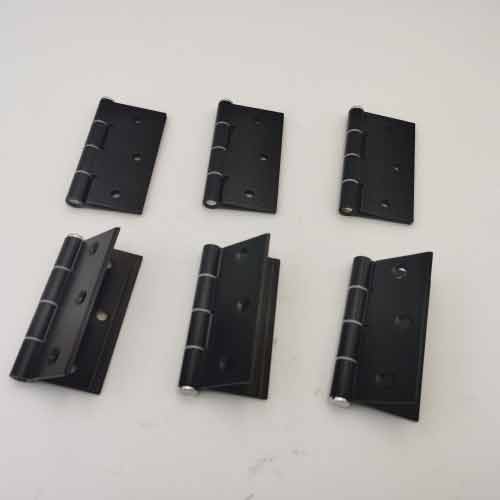
Product details description
Door hinges are essential hardware components that enable the smooth
operation of doors while supporting their weight. The durability and performance
of door hinges are directly influenced by the material they are made from,
making material selection a critical consideration for both residential and
commercial applications. Three of the most common door hinge materials are
stainless steel, brass, and iron, each with distinct properties that affect
their durability, corrosion resistance, aesthetic appeal, and cost. A thorough
comparison of these materials based on durability—including resistance to wear,
corrosion, and mechanical stress—helps ensure that the selected hinge is
suitable for the intended use and environment.
Stainless steel door hinges are renowned for their exceptional corrosion
resistance and durability, making them ideal for high-moisture environments and
heavy-use applications. Stainless steel contains chromium, which forms a
protective oxide layer on the surface, preventing rust and corrosion even when
exposed to water, humidity, or harsh chemicals. This makes them a popular choice
for bathrooms, kitchens, outdoor doors, and coastal areas where saltwater
exposure is a concern. Stainless steel hinges also offer excellent mechanical
strength, able to support heavy doors (up to 200 pounds or more) without bending
or deforming. Additionally, they require minimal maintenance, as they do not
need to be painted or coated to maintain their performance, and they retain
their appearance over time.
Brass door hinges are valued for their aesthetic appeal and moderate
durability, making them suitable for interior applications where appearance is a
priority. Brass is an alloy of copper and zinc, which gives it a warm, golden
finish that adds a touch of elegance to any door. While brass is more
corrosion-resistant than iron, it is less resistant than stainless steel,
particularly in high-moisture environments. Brass hinges are prone to tarnishing
over time, which can be addressed with regular polishing. In terms of mechanical
durability, brass hinges are suitable for light to medium-weight doors (up to
150 pounds) and perform well in low to moderate use applications, such as
residential interior doors. They are not recommended for outdoor use or
heavy-use commercial applications due to their lower strength and corrosion
resistance.
Iron door hinges are known for their strength and affordability, making
them a common choice for heavy-duty applications where cost is a consideration.
Iron is a strong, rigid material that can support very heavy doors (up to 300
pounds or more), making it suitable for commercial doors, garage doors, and
exterior doors in non-coastal areas. However, iron is highly prone to rust and
corrosion, especially when exposed to moisture or humidity. To mitigate this,
iron hinges are typically painted, galvanized, or coated with a rust-resistant
finish. Without proper maintenance—such as regular repainting—iron hinges will
degrade over time, leading to stiffness, squeaking, and eventual failure. Iron
hinges have a more industrial appearance, which may be suitable for certain
architectural styles but is less versatile than stainless steel or brass.
When comparing the durability of stainless steel, brass, and iron door
hinges, it is clear that each material has its strengths and limitations.
Stainless steel offers the best overall durability and corrosion resistance,
making it the top choice for harsh environments and heavy use. Brass provides a
balance of aesthetic appeal and moderate durability for interior applications.
Iron offers superior strength at a lower cost but requires regular maintenance
to prevent corrosion. The selection of hinge material should be based on the
application’s specific requirements, including environmental conditions, door
weight, use frequency, and aesthetic preferences. By choosing the right
material, homeowners and businesses can ensure that their door hinges provide
reliable performance and long-lasting durability.
Previous article:
Door Hinge Lubrication Maintenance: Noise Reduction and Operating Life Extension
Next article:no more